Perelman Arts Center
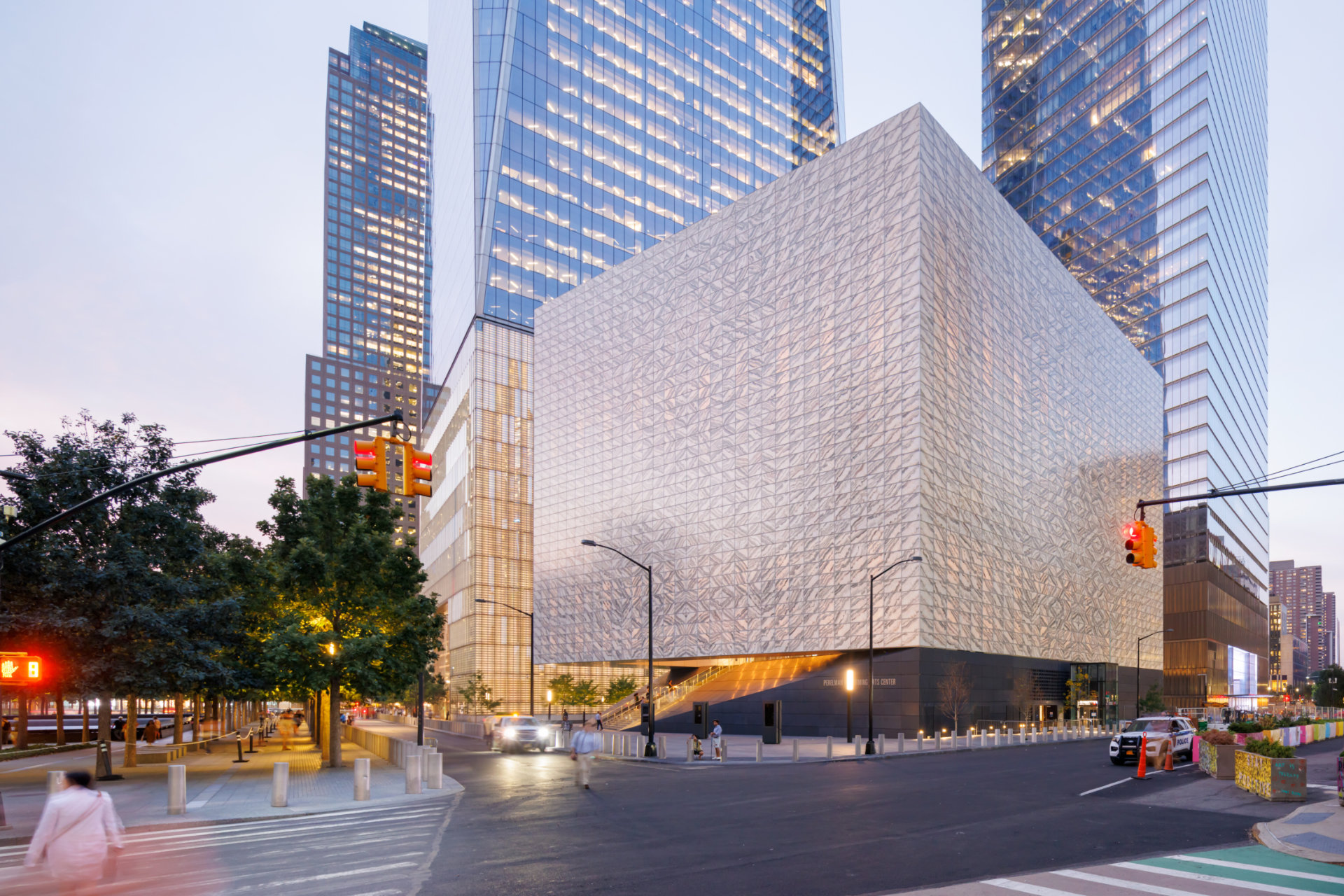
/ A glowing marble cube at the World Trade Center
Published on:



A marble lantern
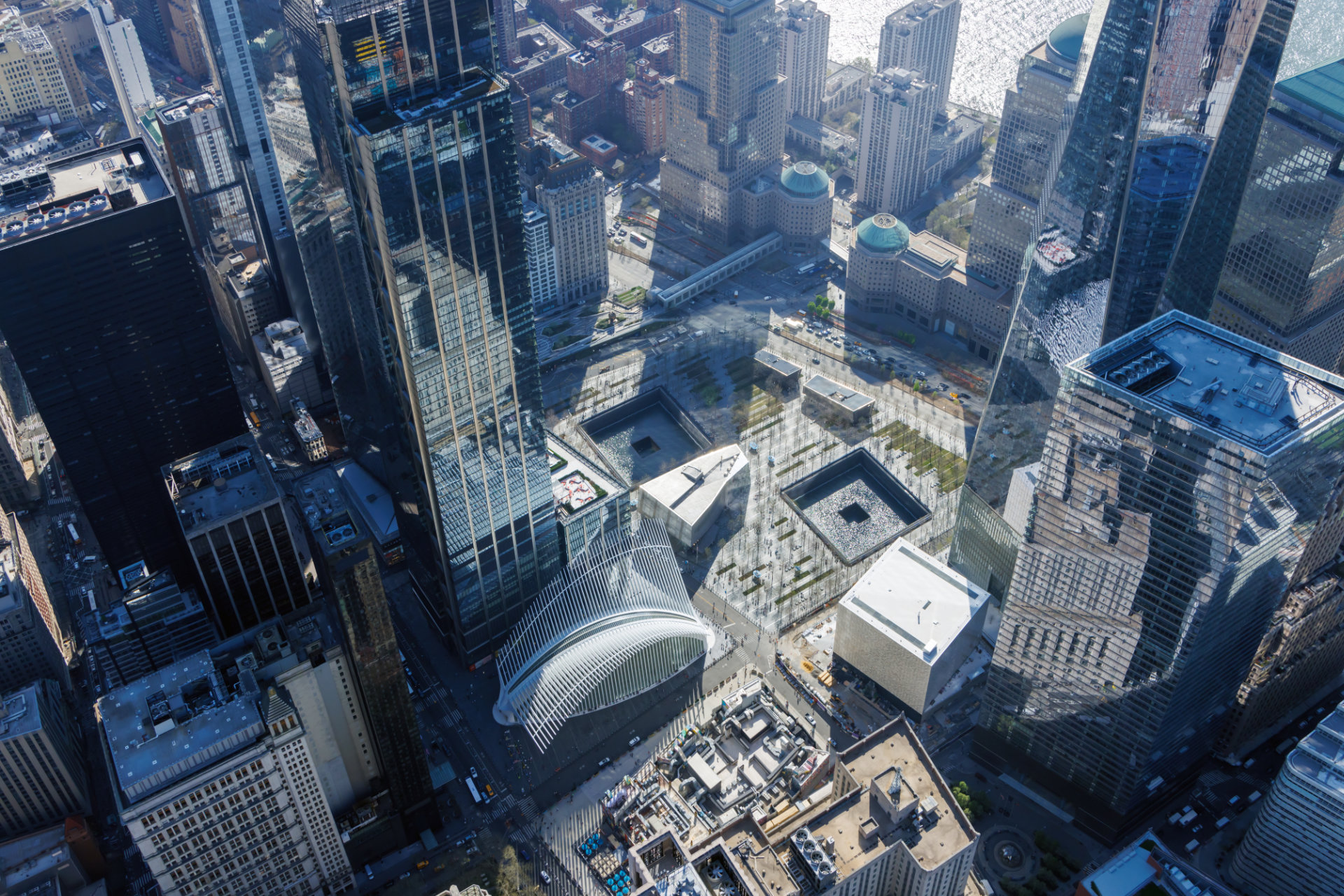
Designed to stand out as a beacon of light in the busy World Trade Center, the Perelman Arts Center emerged as the final component of Daniel Libeskind's masterplan. Officially opened in the fall of 2023, its creation followed REX's competition victory in the winter of 2015, during which time I contributed as a designer on the competition team.
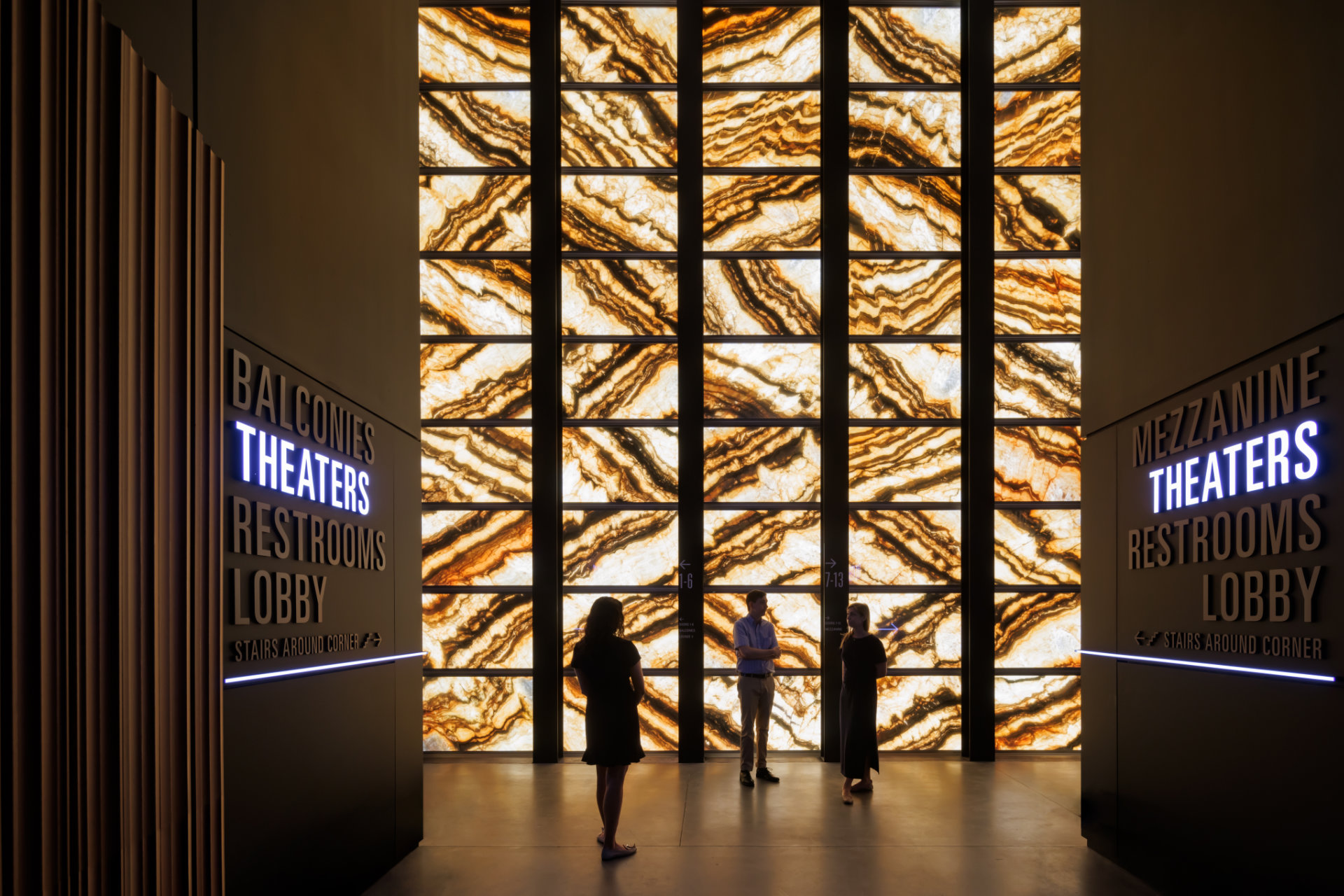
The structure is built over the remnants of an earlier building, concealing its basement within an elevated platform. This platform supports a luminous marble lantern. Within this enclosure lies a collection of adaptable theaters, surrounded by a distribution space. This space is bathed in natural light filtering through the marble, drawing in the vibrant life of New York City.

Facade optimization
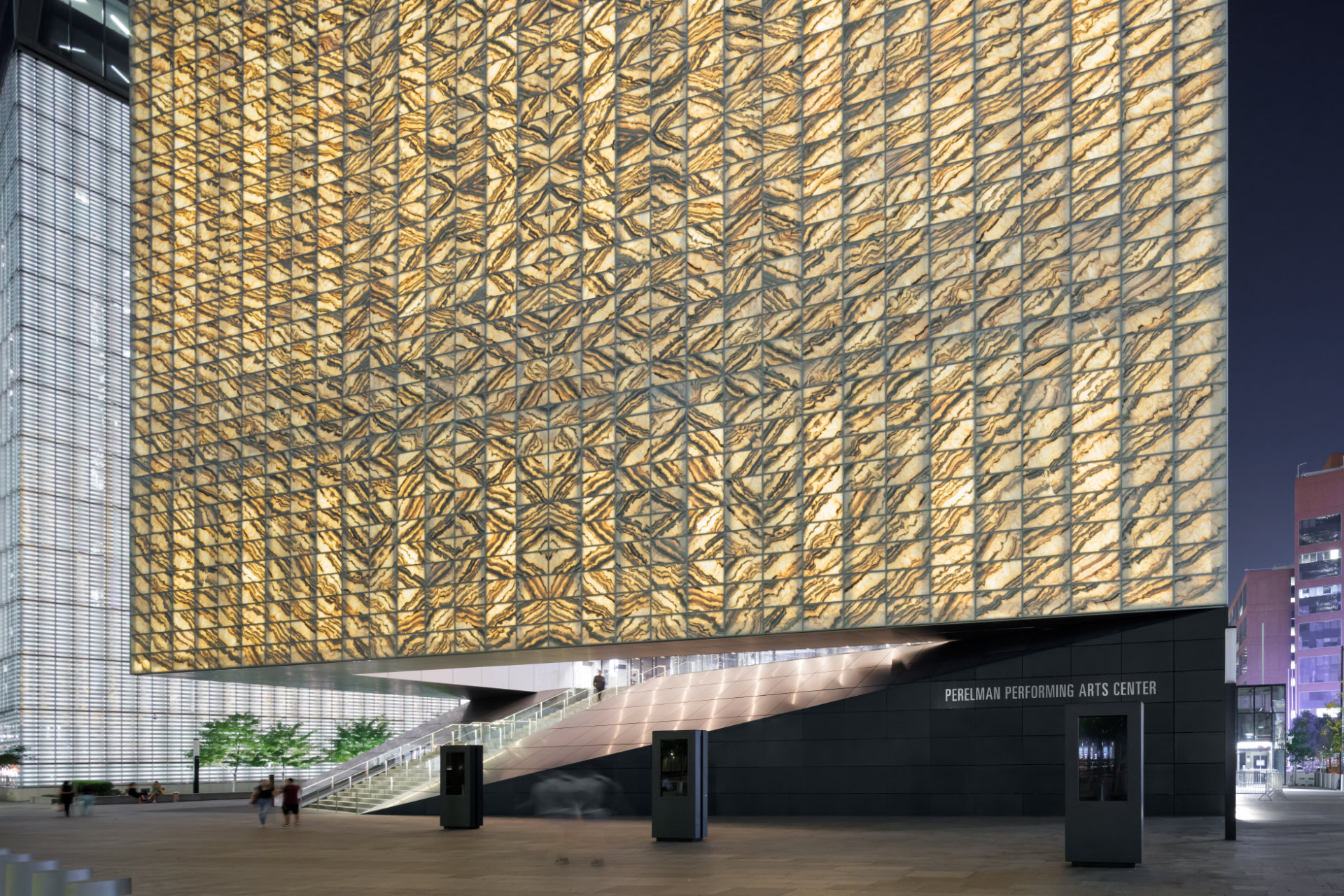
My first contribution the project was studying the facade pattern, maintaining the idea of regularity while adding some randomness, all while optimizing the amount of material used. A double axial-simmetrical pattern was designed and obtained by cutting from the same stone. While the simmetry near the center it's visible, it gets less visible towards the outside, adding a sensation of randomness to the overall pattern.
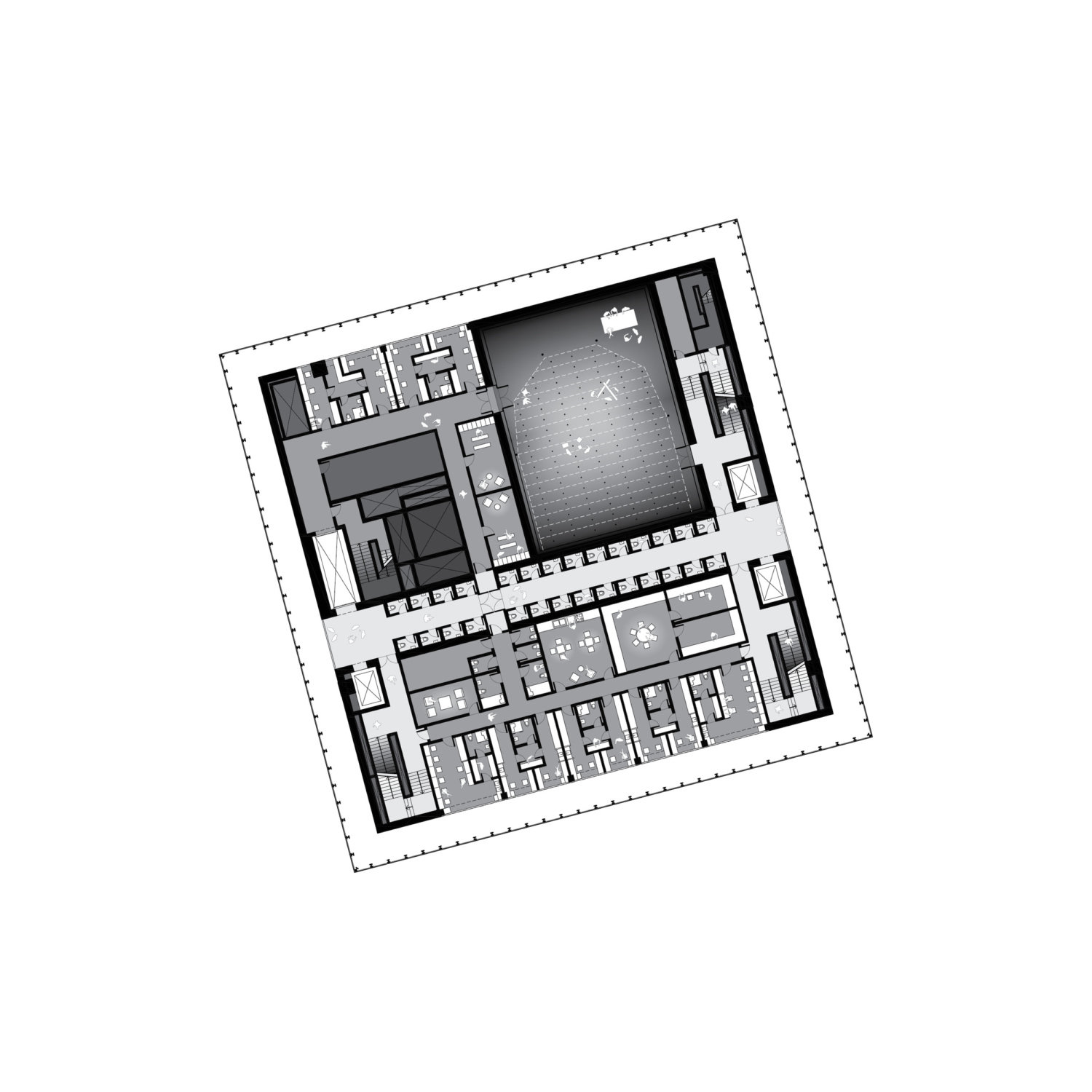
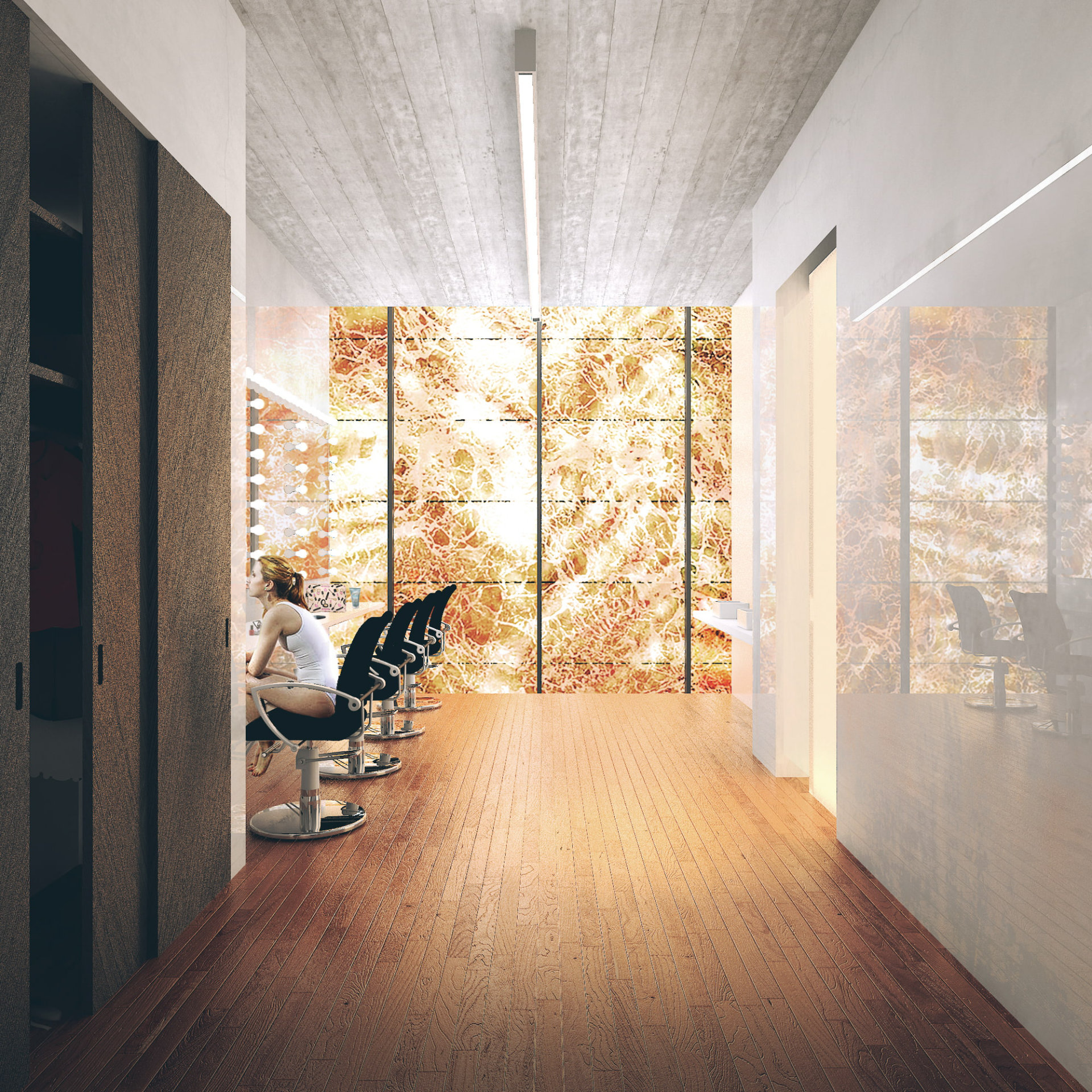
My other contribution was the design of the higher floors, where dressing rooms and rehersal room are located. The floorplan was designed to optimize space while maintaining privacy between each performer. Different types of dressing rooms were designed, and visualized with renderings to maximise the relation with the marble facade.
Showcasing dynamism
In the autumn of 2015, REX, along with two other world-famous architectural firms, was invited to present a design proposal for a new Performing Arts Center. I was part of the team from the beginning, where my role included designing various spaces and creating visual renderings, detailed drawings, and scale models for the competition entry.
The centerpiece of our submission was an intricate physical model that showcased the lively interior spaces and the striking, illuminated exterior. This large-scale model was designed to be modular, allowing for sections to be removed and display the internal layout of the theaters and the organization of the different functional areas, which included public spaces, performance areas, and rehearsal zones.
Additionally, we developed a series of diagrams that clearly displayed the flexibility of the spaces, demonstrating their capacity to accommodate a variety of performance types and audience configurations. Our comprehensive and detailed presentation paid off when REX was announced as the winner of the competition. The Performing Arts Center opened its doors for the first time in the fall of 2023.